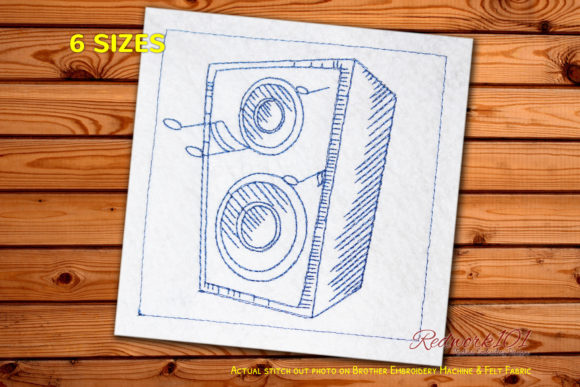
Reviewing the Music Speaker Redwork Embroidery Design
From a craft fair booth loaded with aprons, totes, and patches to an Etsy shop with digital files, an embroidery design needs to earn its place. Today, I’m looking at the Music Speaker Redwork design with a practical eye, judging its potential as a handmade product for market stalls and online shops.
First Impression: Modern & Decorative Appeal
The title Music Speaker Redwork gives a clear, modern vibe. It’s not overly rustic or farmhouse; it leans decorative and contemporary. This is promising. At a bustling fair, a design needs to communicate its theme instantly. “Music” paired with “Speaker” is universally understood, and “Redwork” suggests a classic, single-color embroidery style that often feels premium and focused. The optional box stitch mentioned in the description adds an interesting layer. It hints at flexibility—the core speaker design can stand alone as a clean, minimalist graphic, or be framed for extra visual punch.
Product Placement: Where This Design Stands Out
Imagine your display table. Where does Music Speaker Redwork belong?
On tote bags and market bags, this design would work beautifully as a medium to large focal point. Its graphic nature would be eye-catching and modern, appealing to a younger, music-loving crowd. For apron embroidery, placing it on a pocket or the chest area would create a stylish, thematic kitchen or craft apron. As an embroidered patch, it’s a winner—the clear, recognizable shape is perfect for iron-on or sew-on patches for jackets and bags, a highly popular product.
On tea towels and pillow covers, it offers a more decorative, less kitschy alternative to many typical motifs. It feels giftable. For caps, careful consideration is needed due to the curved surface; the design would need to be sized appropriately to avoid distortion. For small pouches and giftable items, a smaller version could serve as a charming accent.
The Digital Seller’s Perspective
As a digital embroidery file for other makers, Music Speaker Redwork has strong appeal. Its clear subject matter fits a niche (music-themed crafts) without being overly narrow. The optional box stitch increases its versatility, allowing sellers to offer variations. This makes it a valuable design asset for commercial embroidery and small shop products.
Practical Production & Selling Points
Now, let’s talk about turning this design into actual, sellable craft fair products.
- Visual Clarity: The speaker shape should be instantly recognizable. This is crucial for quick customer engagement at a booth. Designs that are too abstract can confuse; this one seems straightforward.
- Scale Flexibility: Can it be shrunk for a small pouch or enlarged for a tote? Based on the description, it likely can, but tiny details or dense stitch areas might lose clarity at very small sizes. Always test on scrap fabric first.
- Batch Production: A clean, single-color (redwork) design is often excellent for repeatable batch production. Stitching multiple items becomes more efficient.
- Photography for Online Sales: For your Etsy listings or printable mockups, a graphic design like this photographs well. It provides a crisp visual against various fabric colors, especially with good thread contrast.
Careful-Use Notes for the Embroidery Designer
Before you stitch this onto products for sale, run through this checklist:
- Test on Scrap Fabric: Use the actual fabric you plan to sell (like textured towels or thick canvas for tote bags). Check for puckering or stitch density issues.
- Check Thread Contrast: The “Redwork” title suggests red thread, but test on both light and dark fabrics. On dark fabric, you might need a brighter or contrasting thread for visibility.
- Review Spacing & Hoop Size: Confirm the design fits comfortably within your intended hoop size for the product. Ensure any optional box stitch elements have proper spacing from the main speaker.
- Inspect Stitch Density: Dense areas can be tough on certain fabrics. A well-digitized design should have consistent density for smooth production.
- Use the Right Stabilizer: This is non-negotiable for a professional finish, especially on items like aprons or caps that will be used and washed.
- Create a Real Mockup: Before batch production, make at least one finished product—a real tote bag, towel, or patch. See how it feels in person. Does it look handmade and quality?
- Compare Fabric Colors: See how the design looks on different backgrounds. Sometimes a design pops on natural linen but fades on black cotton.
- Confirm Commercial Licensing: If you are using a purchased embroidery file, always verify that your license permits selling finished products at craft fairs or online.
Impact on Your Booth and Brand
How does Music Speaker Redwork affect your overall presence?
It adds modern, decorative variety. If your booth leans rustic or floral, this design introduces a contemporary edge that can attract a different customer. It enhances product value by offering a clear, themed option. For brand consistency, if your shop focuses on music or modern graphic designs, it’s a perfect fit. As a booth display sample, a well-made tote bag with this embroidery can draw significant attention—people notice clean, graphic art on functional items.
Ultimately, the success of this machine embroidery design as a craft fair product hinges on its execution. Its strength is its recognizable theme and graphic potential. Its challenge, as with any design, will be in the meticulous production—choosing the right products, fabrics, and thread to let it shine. For the embroidery business owner looking to fill a niche in the handmade market, Music Speaker Redwork offers a solid, marketable concept worth testing in your next product run.