Kingsnake Redwork: A Designer's Honest Stitch Test
Sometimes a design arrives on my screen and I immediately picture it on a soft, washed-canvas tote, the kind that feels both rugged and refined. That was exactly my first reaction to the Kingsnake Redwork embroidery file. It's not a loud, overly cartoonish reptile – it has a quiet confidence that makes it appropriate for grown-up accessories, nature-inspired baby gifts, or even a curated line of boutique patches. But before loading any hoop, I always walk through every practical layer a stitcher or small shop owner would face. Here's how this redwork piece holds up under that real-world lens.
A First Look That Feels Deliberate
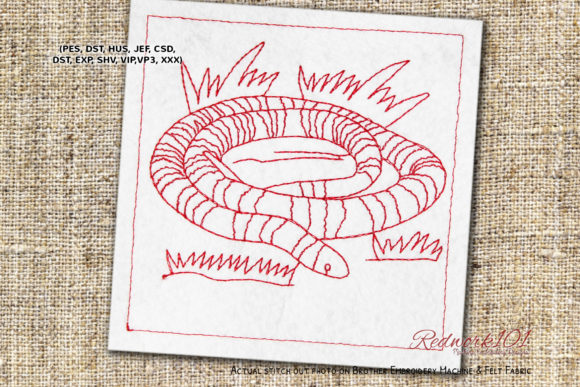
Redwork forces a design to survive on line alone, and Kingsnake Redwork does that well. The snake's posture is fluid but controlled, with enough body curve to feel natural without becoming tangled or losing legibility on textured fabrics. The knot-like scales create a rhythmic pattern that would stitch out cleanly as running stitch sections, while the head keeps just enough detail – a flick of tongue, a gentle eye shape – to make it recognizable even to someone who's never met a kingsnake.
There's a nostalgic but not outdated mood here. I'd describe it as heritage craft meeting modern minimalism. If you're building a product around subtle storytelling rather than a loud statement, this design fits right in. The overall visual weight also feels balanced, which is critical when you're dropping an embroidery onto the pocket of a chambray shirt or the front panel of a baby romper. Lopsided motifs are the enemy of gift appeal.
Where Kingsnake Redwork Earns Its Keep
I mentally test every design across my most common client requests and personal projects. Here's where Kingsnake Redwork steps up most naturally:
- Tote bags and canvas pouches. The crisp, uncluttered silhouette stands out on natural cotton without needing any fill stitch support. It turns a simple market tote into something that feels carefully designed, not stamped.
- Sweatshirt and crewneck accents. Placed small over the heart or as a center-back detail, the redwork reads artisan rather than aggressive. It pairs beautifully with a speckled or heather fabric.
- Baby and toddler apparel. A soft, organic onesie with this snake becomes a thoughtful "gentle wild" gift. Parents who love nature nods will choose this over generic zoo animals.
- Kitchen textiles. Tea towels and linen aprons are redwork's historical home. The Kingsnake Redwork motif here leans slightly rustic, perfect for a farmhouse kitchen or a southern cottage vibe.
- Embroidered patches. Stitch it on felt or heavy twill with a merrowed edge and you have an instant enamel-pin alternative for reptile lovers, field biologists, or conservation fundraisers.
- Paper goods mockups. For digital product sellers, a high-quality stitch-out photo of this design becomes a powerful printable mockup that communicates craftsmanship instantly to craft business buyers.
Fabric, Stabilizer, and the Honest Limits
No matter how elegant the artwork, some base materials fight back. With a design this linear, keep these cautions in mind:
- Stretchy or thin fabrics. A lightweight jersey or slub tee can distort running stitches under tension. Always use a fusible, no-show mesh stabilizer on the back and a water-soluble topper on the front to prevent the snake from sinking into the knit.
- Textured or heavily napped fabrics. A fluffy blanket or a thick terry robe will swallow the fine tongue and scale lines. If you must go that route, enlarge the design and test on scrap with extra underlay.
- Dark backgrounds. Traditional redwork relies on contrast. A deep navy or charcoal can work if you swap the thread to a burnt orange or soft gold, but the original red will lose its punch. Test on black fabric before committing to customer orders.
- Small hoop constraints. If the design was digitized for a 4x4 inch hoop, the snake's head and tail may crowd the frame. Check actual stitch area, not hoop size, and make sure the winding body doesn't kiss the hoop edge—nobody wants a decapitated kingsnake.
The Box Stitch Option: An Underrated Design Asset
One detail I genuinely appreciate about Kingsnake Redwork is the optional box stitch mentioned upfront. That outer frame isn't always part of the snake – it's a separate element, and the thread color for that box can be skipped or swapped. For many projects, I'd leave it off. A framed snake suits a formal patch or a vintage label look, but an unframed snake feels more modern and adaptable. Imagine it curled on a slouchy beanie or winding around a denim jacket collar; the frame would kill that organic movement.
If you keep the box, treat it as a deliberate design decision. Use a thread color that ties into the product – maybe olive green on a canvas pouch, or soft mustard on a kitchen towel. I'd also warn stitchers: the box stitch might be a simple running line, but corners can pile up thread if the machine isn't calibrated. A quick test on the same fabric reveals if you need to slow the speed or adjust tension for crisp 90-degree turns.
Stitch Density and Thread Color Choices
Good redwork relies on uninterrupted, well-placed lines. From previews, the Kingsnake Redwork design appears to favor a lightweight but confident running stitch approach, with no dense satin blocks bulking up the shape. That's a plus for wearables – less stiffness, faster sew-out. I'd still watch for any tiny needle penetrations clustered too close, especially around the eye and tongue, where thread breaks can happen on high-speed machines. If your software shows a stitch count, aim for under 6,000 stitches in a 4-inch design to keep drape soft.
Thread color is where this design breathes. Traditional red (think DMC 321 or a deep brick polyester) holds the heritage appeal, but don't be afraid to personalize. A muted teal on natural linen gives a seaside spa feel; a charcoal grey on cream becomes urban and minimal. For market prep, stitch out the same design in three different colorways and photograph them side by side – that single collage can triple your Etsy listing's emotional reach.
What I'd Tell a Small Shop Owner Before Pressing Start
If you're planning to sell finished products with Kingsnake Redwork, there are a few honest steps I'd never skip:
- Stitch a sample on the exact garment or product. Not a similar one – the exact one. A 5-ounce twill tote behaves differently from a 7-ounce one.
- Wash and dry the finished piece. Redwork snags are rare, but you'll spot any stabilizer residue or thread shrinkage that could disappoint a buyer.
- Take a black-and-white photo of the stitch-out. This reveals contrast gaps. If the snake's detail disappears, you need a bolder thread or a fabric with less visual noise.
- Check your licensing. Some embroidery files come with personal-use-only restrictions, others allow commercial resale on physical goods. Read the terms before that craft fair inventory goes live.
- Consider the box stitch's role. Decide early if your product line is framed or unframed. Consistency across your shop builds a cohesive brand look.
Why This Design Raises the Perceived Value
Handmade shoppers are savvy. They notice when a design looks mass-produced versus intentionally curated. Kingsnake Redwork adds an element of wild charm without feeling juvenile. When I imagine a boutique display – a stack of tea towels with this snake flanked by dried lavender bundles – the perceived value jumps. That's the kind of product that commands a $28 price point instead of $14, simply because the embroidery feels like a signature, not a clip-art transfer.
For giftability, the reptile category can be tricky, but this design sidesteps the "ew, snake" reaction by staying elegant. It fits a niche that's surprisingly wide: reptile keepers, herpetology students, native plant gardeners who appreciate a kingsnake's pest-control reputation, and anyone with a soft spot for southern folk art. That niche loyalty often means repeat purchases and word-of-mouth referrals.
From Screen to Stitch: Final Thoughts Before You Commit
I've learned through too many botched project bags that even a beautiful design needs a real-world trial. Before you order those blank totes or list a new baby bib set, do a one-hoop test of Kingsnake Redwork on scrap fabric. Watch the machine navigate the curves, check that the optional box ends meet cleanly, and then hold the result under daylight. If it still makes you smile, you've got a design asset that can quietly elevate your entire craft business for seasons to come.
For those selling digital embroidery files themselves, this redwork piece photographs beautifully in styled flatlays. The linear purity means you can showcase it clearly in printable mockups for Etsy thumbnails, helping buyers instantly grasp the final look. A crisp stitch-out on a neutral linen background works harder than any overly staged shot.
Ultimately, Kingsnake Redwork is the kind of embroidery project that feels smart, not showy. It won't shock, but it will settle confidently into the best of your product lineup – and in a maker's world, that quiet reliability is worth every stitch.