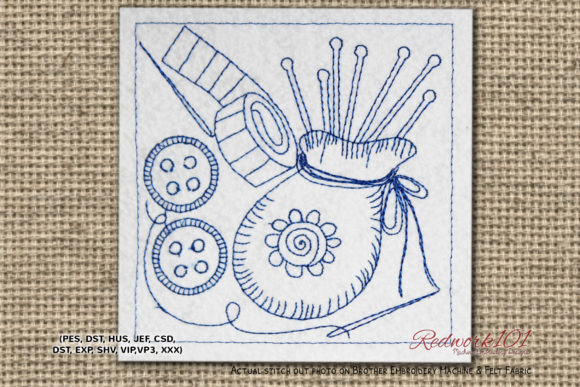
Redwork Embroidery for Knitting & Sewing Accessories
As an embroidery designer preparing for a craft fair, the moment you open a new file like Knitting and Sewing Accessories Redwork, you're evaluating its potential to sell from your booth. This design immediately conveys a craft-centric, decorative, and slightly rustic feel. The title suggests a niche focus—this isn't for everyone, but for the knitters, sewists, and makers browsing your table, it could be a perfect match.
First Impression & Market Fit
The "Redwork" style typically implies a classic, often single-color embroidery aesthetic, which can feel both handmade and premium. For a market full of creative entrepreneurs, this design isn't flashy; it's confident and clear about its audience. It feels like a decorative accent rather than a bold statement piece, which means it will work best on products where that subtlety is valued. Your first task is to visualize where it will stand out among your aprons, tote bags, and tea towels.
Which Products Will Carry This Design Best?
Think about your display. A bustling craft fair is about quick visual grabs. Knitting and Sewing Accessories Redwork needs the right canvas.
- Tote Bags & Market Bags: On a simple canvas tote, this design can become a lovely focal point. Its niche theme makes the bag feel like a specialty item for crafters, potentially increasing its perceived value.
- Aprons: A kitchen or crafting apron is a fantastic fit. The design aligns perfectly with the apron's function, creating a cohesive, giftable handmade product.
- Tea Towels & Kitchen Towels: This is a prime candidate. Redwork on a linen or cotton towel offers a timeless, farmhouse-style decorative element that sells well at fairs.
- Pillow Covers: For a smaller accent pillow in a sewing room or cozy living space, the design could add a personalized touch.
- Fabric Pouches & Small Gift Items: Smaller items like zipper pouches for knitting needles or sewing tools make excellent, lower-price-point options. The design acts as both decoration and identifier.
- Embroidered Patches: This could be a strong seller. A patch with this theme allows customers to personalize their own gear. However, you must carefully check the file's stitch density and any small lettering to ensure clarity at a smaller size.
- Caps: Be cautious. Embroidering on a curved cap surface requires testing. Small details might get lost, and the textured fabric can pose challenges.
Where it might not shine: As a large, singular focal point on a very minimalist product. Its appeal is in its thematic connection, not in overwhelming boldness.
Production & Practicality for the Maker
Turning this digital embroidery file into a batch of craft fair products requires a practical review.
Evaluating the Design for Production
- Understanding at a Glance: The title and description are clear. Customers should instantly recognize the theme, which is crucial for fast booth engagement.
- Scale & Size: You need to determine if it works as a small accent or needs to be larger. Without knowing the exact stitch count or suggested hoop size, you must test it. Create at least one real mockup on scrap fabric first. See how it looks at different dimensions.
- Photographing for Online & Etsy: Redwork on light fabric photographs beautifully for Etsy listings and printable mockups. On darker fabrics, thread contrast is vital—test that. The optional box stitch mentioned in the description could add a framing element, but check how it interacts with the main design.
- Repeatability for Batch Production: Does the design have dense stitch areas that could slow down your machine or require frequent thread changes? Is it consistent enough to run on multiple tea towels without you tweaking each one? These factors affect your weekend output.
Critical Careful-Use Notes
Every embroidery designer knows pitfalls. For Knitting and Sewing Accessories Redwork, consider:
- Tiny Details & Lettering: If the design includes small text or intricate accessory outlines, they may lose clarity on textured towels or when minimized for a patch. Always test the smallest version you plan to sell.
- Stitch Density: High density on thick fabric like canvas for tote bags requires the right stabilizer. It also affects production time.
- The "Box Stitch" Note: The description says the box stitch is optional and often a different color. This is a design flexibility point. You can choose to include it for a framed look or omit it for a cleaner appearance. This choice can alter the final product's style—more modern without the box, more traditional with it.
- Fabric Color Comparison: Redwork implies a likely red thread, but contrast is key. Test on various background fabrics you plan to use.
Selling Power & Booth Strategy
How does this design translate into sales at your handmade market booth?
Visual Appeal & Customer Attention
Knitting and Sewing Accessories Redwork has a targeted appeal. It won't shout to every passerby, but for the right customer, it will create a strong connection. This increases buyer engagement. Someone who loves sewing will stop, touch the embroidery, and see a product made for them. That personal connection often leads to a sale.
Product Value & Handmade Quality
Well-executed embroidery inherently boosts the perceived value of a small shop product. This design, when stitched cleanly on quality linen or canvas, reinforces the handmade quality of your entire booth. It shows specialization. It can also aid brand consistency if your shop focuses on craft and maker themes.
Booth Display Strength
Use it to create a cohesive section. Display an embroidered apron next to a matching tea towel and a pouch. This grouping tells a story and makes your table look thoughtfully curated. A single sample cap or tote bag with this design can act as a conversation starter with fellow crafters.
Final Designer Checklist Before the Fair
Before you commit to producing a line of products with this machine embroidery design, run through this final list:
- Test on Scrap Fabric: Always. Check stitch quality, thread tension, and overall appearance.
- Check Thread Contrast: Especially if you plan to use darker fabrics for some items.
- Review Spacing & Hoop Size: Confirm the design fits your intended hoop sizes for various products without awkward empty spaces.
- Inspect Stitch Density: Run the file. Note if any areas are exceptionally dense, which might require adjustments for different fabrics.
- Use the Right Stabilizer: Match the stabilizer to the fabric—cutaway for heavy bags, tear-away for lighter towels.
- Create a Real Finished Mockup: Make one complete, sale-ready product (e.g., a tea towel). This is your ultimate quality check.
- Compare Fabric Colors: Lay out your planned fabric colors and see how the embroidery looks on each.
- Confirm Commercial Licensing: The product description doesn't specify license terms. You must verify that this embroidery file is licensed for commercial embroidery and selling finished products before you produce anything for sale.
Knitting and Sewing Accessories Redwork has the potential to be a solid, niche addition to your craft fair offerings. Its success hinges on pairing it with the right products, executing the embroidery cleanly, and presenting it to the audience that will appreciate its specific charm. With careful production and a targeted display, it can become a reliable part of your handmade product line.