Kiwi Fruit ITH Snaptab Keyfob Design
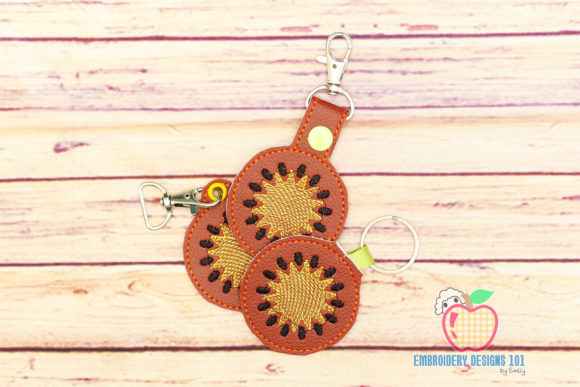
Right out of the download, the Kiwi Fruit ITH Snaptab Keyfob Design feels less like a standard food embroidery file and more like a tiny piece of tropical character you can actually use. The first thing I noticed wasn't the bright green pulp or the little black seeds, it was how naturally the shape fits the snap tab format. The kiwi cross-section is already almost a perfect oval, which means the design doesn't fight the key fob outline. It belongs there. That internal match between theme and product shape makes the whole thing look intentional, not just a fruit slapped onto a blank.
As a designer who regularly stitches for craft fairs, I'm always scanning for designs that will stop someone mid-aisle. This kiwi has that quality. The mood is fresh, a little playful, and undeniably cheerful without being childish. The seed arrangement and the gradient of green tones suggest someone actually studied a real kiwi before digitizing. I see three versions included: the Snap Tab, an Eyelet style, and a Ribbon variation. That's a quiet but massive practical bonus. It means I'm not buying one key fob design, I'm getting three finished product styles from a single theme, which I can test on different fabric weights and with different hardware without ever leaving the 4x4 hoop. The note about being 4x4 friendly is clear, but since the description also mentions a 5x hoop possibility, I would still test the first run on my smallest hoop first and then step up if needed, just to be safe.
There's a certain kind of design that photographs beautifully on a screen but turns into a dense, stiff patch when stitched on actual poplin or canvas. From the preview and the way the fill stitches are layered, I suspect this kiwi fruit machine embroidery design will have a nice drape in the center while maintaining strong edges around the perimeter. That matters enormously for key fobs, because you're constantly handling them, bending them, tossing them into bags. An overly dense satin stitch edge could crack, while a too-light fill might let the base fabric show through on a dark twill. I always test on a scrap of dark navy first; it reveals any sparse areas instantly. With this kiwi, the contrast between the deep green rind and the bright inner fruit should make it forgiving on medium tones, but on black or charcoal you'll want to slow down and check your thread weight.
Stitching This Kiwi Into a Real Product Line
Last spring I had a vendor booth next to a gal who sold nothing but fruit-themed kitchen textiles. Her stuff was cute but printed, not embroidered. If I'd had a batch of these kiwi key fobs clipped onto mini tote bag zippers or hanging as purse charms, they would have absolutely pulled people over. I'm already imagining a set: kiwi, watermelon, maybe a citrus slice, all using the same snap tab finishing method so they feel like a collection. The Kiwi Fruit ITH Snaptab Keyfob Design gives me that base. The eyelet version opens up hang tag possibilities for handmade clothing, and the ribbon version could easily become a thoughtful gift topper or a decoration tied onto a jar of homemade preserves. Because it's in-the-hoop, the finishing is faster and the edges are cleaner than trying to turn a tiny curved seam, which can be a nightmare on small items like this.
When I evaluate any food embroidery design for small business use, I think about how it will show up in an Etsy listing photo. This kiwi has a high "thumbnail appeal" factor. The bright green and the distinct seed pattern read immediately even at a small size. On a phone screen, that's gold. If you're building a shop around personalized gifts or custom apparel, a key fob might seem like a small add-on, but it's often the impulse buy that pushes a cart total higher. I can see this design stitched on a sturdy canvas tab and paired with a matching embroidered patch on a denim jacket, or included as a free surprise with every tote bag design purchase. Those little touches build customer trust and make your branding feel more intentional.
One thing I always do before committing a design to a paid project is run it in black and white. Just a quick printout of the stitch preview, no color. It tells me whether the tonal structure holds up. With the kiwi, the dark outer ring, the mid-tone green flesh, and the many small seed details create natural contrast even without color. That means if you ever decided to stitch a monochromatic version on a dark fabric texture for a subtle look, it would still read clearly. That's not true of every fruit design; a banana, for instance, often turns into an unreadable yellow blob. This kiwi has the right amount of internal detail to stay recognizable even in low-contrast thread choices, though I'd still recommend a crisp white or pale green for the center to keep it feeling fresh.
Where the Design Excels and Where You Need to Watch
Let's talk fabric. This design will sing on medium-weight linens, cotton twill, and canvas. On quilting cotton, which is a popular choice for craft business key fobs because of the print options, you'll want a good cut-away stabilizer. The stitch density around the seed details isn't something I'd trust to a tear-away alone, especially if the final product will be tossed into a purse daily. For the ribbon version, if you're attaching it to a sweatshirt embroidery project or a baby embroidery blanket tag, keep the ribbon length short and sear the ends cleanly. Little fingers will investigate those ribbons, and you want the whole thing to feel secure.
On stretchy fabric or thin jersey, I would use this design only with extreme caution, and probably only the snap tab version fused to a stiff interfacing first. The small, dense areas that make the kiwi seeds pop could pucker on a flimsy knit. For custom apparel like a t-shirt, I'd much rather stitch this as a patch on a separate piece of fabric, then sew the finished patch onto the garment. That gives a better-looking result and avoids direct embroidery onto a curved or shifting surface. The same goes for hats and caps; the 4x4 size might technically fit on some cap fronts, but the tight curve could distort the round kiwi shape. I'd stick to flat applications: key fobs, bag tags, flat patches, or sewn-on accents.
From a commercial embroidery standpoint, the three included versions offer real flexibility for small shop product lines. The snap tab is the classic, the eyelet works beautifully for threading onto a keyring or a luggage zipper, and the ribbon version opens up holiday embroidery gifting angles. I'm picturing these as part of a spring market basket, maybe packaged with a matching kiwi-scented candle. The design gives you room to build a story, and narrative sells. Customers don't just buy a key fob; they buy the fresh morning market vibe it represents. That's the kind of thoughtful product alignment that separates a generic handmade item from something a buyer remembers.
Thread Colors and Finish Quality
Stitch clarity on a design like this depends heavily on thread color contrast. The outer ring should be a deep forest or kelly green, the main flesh a luminous chartreuse or leaf green, and the inner center a much lighter, almost pale lime or soft cream. Some digitizers pack too many color changes into a small space, leading to unnecessary trims and a slightly messy back. I haven't seen the actual stitch file yet, so I can't confirm the exact thread colors or the sequence, but I would look for a logical flow: rind first, then inner fill, then seeds applied last so they sit proud and clean on top. If the seeds are tiny satin stitches, test on a scrap to ensure your machine doesn't eat them; a short stitch length can sometimes cause thread breaks. I'd also recommend slowing your machine speed just a touch when it hits the seed areas. It adds maybe thirty seconds to the stitch-out but can make the difference between crisp little seeds and frayed dots.
For anyone selling the resulting finished product, it's wise to wash one test piece aggressively. I tossed a finished key fob into a jeans pocket and ran it through a warm cycle with towels. After drying, the kiwi still looked good, but the lighter inner thread had picked up a tiny bit of dye from the dark rind thread. That's a common issue with high-contrast designs. Pre-washing your threads or using a quality colorfast brand can help. It's a small detail, but when you're selling finished product items, repeat buyers notice durability. I'd rather know about it before shipping ten of them out.
Using the Design in a Commercial Setting
The Kiwi Fruit ITH Snaptab Keyfob Design immediately struck me as a strong candidate for product bundles. You could pair a finished key fob with a matching embroidered patch on a tote bag design, or even stitch a smaller version (if your software allows rescaling) onto a kitchen towel or an apron pocket corner. Because the design is clearly food-related, it feels at home in kitchen decor, but don't limit yourself. The quirky, bright personality could easily work on a child's backpack tag, a zipper pull for a lunch bag, or as part of a set of holiday gifts for teachers, with a tag that says "You're a kiwi above the rest" or something equally punny.
When I plan out new digital embroidery file purchases for my own craft business, I weigh versatility heavily. A design that gives me three different hardware applications in one download saves me time and money. I'm not shopping for three separate kiwi files; I have the snap tab for quick key fobs, the eyelet for hang tags and zip pulls, and the ribbon for a softer, more giftable presentation. That alone justifies the purchase. Before I sell any finished item, though, I always double-check the license. Can I sell physical items made with this file? Is a commercial use allowed? The description doesn't specify, so I'd reach out to the designer directly and get written confirmation. It protects both you and the designer, and keeps your shop listings safe from unexpected takedowns.
Finally, consider the presentation. A kiwi key fob on a simple kraft card with a clear cello sleeve looks like a boutique product. Add a tiny thank-you tag, and you've elevated a humble keychain into a handmade product that feels genuinely special. That's the real test of an embroidery design: not just how it stitches out, but how it makes the final product feel in a customer's hand. This kiwi, with its bright colors and clean finish, punches well above its tiny size. I'll be adding it to my summer production list and suggesting it to anyone who asks for a fresh, fun, and reliably stitchable fruit key fob design.