Happy Bee Carries Gift Redwork Review
There are embroidery designs that simply stitch out, and then there are seasonal storytelling pieces that shift the entire mood of a product line. Happy Bee Carries Gift Redwork lands squarely in the second category. As a designer continuously curating collections for holiday drops, family gift ranges, and limited‑edition handmade decor, I look for files that feel playful yet polished, and this one delivers exactly that. The little bee, the wrapped present, and the delicate redwork line art create an instant sense of nostalgic charm — the kind that sparks buyer emotion before a single word of marketing is written.
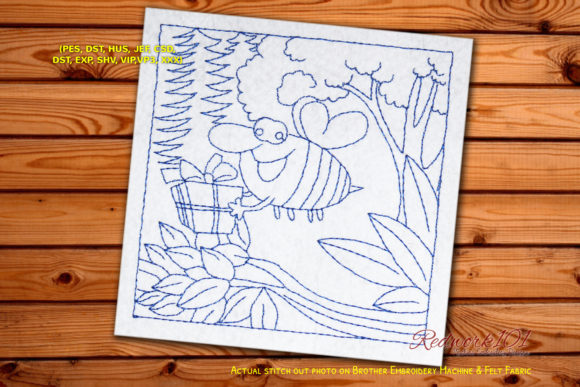
My first impression was how well this design bridges cozy and festive without leaning too far into December‑only territory. Yes, it shines during Christmas, but the bee carrying a gift also works for spring celebrations, Mother’s Day, birthday items, “just because” gifting, baby showers, and even Valentine’s touches. That versatility is gold for small shops that need designs to earn their place across multiple selling seasons. The optional box stitch mentioned in the product notes — the outer frame that can vary in color — gives you instant control over presentation. You can skip it entirely for a soft, unframed look, or keep it for a crisp finishing border that frames the bee beautifully on square hoop projects like pillow covers or tote bag panels.
First Stitch‑Out and Artistic Character
The moment the redwork lines start forming on the fabric, you notice the clean, singular‑color impact. This isn’t a densely filled piece that will warp lightweight garments; it’s a refined line drawing that breathes. The happy bee has a gentle, illustrative quality — rounded wings, a soft smile in the silhouette, and the gift box angled just enough to suggest movement. It feels hand‑drawn and warm, not rigid or overly digitized. That handcrafted personality is what separates a generic machine embroidery design from a file that makes a finished product feel heirloom‑worthy.
Redwork, by nature, invites traditional stitching appeal while remaining completely modern in execution. The single‑color structure also means you can experiment with thread choices beyond classic red. A deep forest green makes the design feel instantly woodsy and organic for kitchen towel embroidery. A sparkling gold on cream linen transforms it into an elegant ornament or table linen accent. Even a soft charcoal on oatmeal fabric gives the piece a premium, muted Scandinavian look that aligns with minimalist holiday decor trends. This flexibility is a massive plus when you’re promoting the same embroidery file to different customer aesthetics — rustic farmhouse, whimsical children’s gifts, or refined handmade home items.
Seasonal Selling Potential and Product Pairings
When I review a design for holiday product use, I mentally walk through every item type my shop produces. Happy Bee Carries Gift Redwork slots effortlessly into gift bundles and builds emotional value across categories:
- Sweatshirt embroidery: Placed on the chest or a cuff detail, the bee becomes an instant conversation piece for family matching holiday outfits.
- Kitchen towels and table linens: The redwork aesthetic belongs on natural cotton or linen, making hostess gifts feel curated and thoughtful.
- Tote bag design: An everyday bag with this cheerful bee and gift becomes a reusable wrapping solution — perfect for a “bag as part of the gift” presentation.
- Pillow covers: Stitch it in a tone‑on‑tone thread for a subtle decorative element, or pop it in festive red on a neutral cover for seasonal throw pillows.
- Ornaments: A small‑scale version on sturdy felt or canvas with a ribbon loop turns into a hanging keepsake customers buy in multiples.
- Baby items: The sweet, innocent vibe makes it lovely on bibs, onesies, or nursery decor without feeling genre‑specific.
- Aprons and embroidered patches: Sew‑on patches of the design give denim jackets or kids’ backpacks that handmade gift feel.
For Etsy sellers, this single digital embroidery file can populate an entire holiday collection without looking repetitive. By shifting fabric color, thread choice, and the presence of the optional box stitch, you create distinct product listings that speak to different buyer intents — from “stocking stuffer” to “anniversary keepsake.”
Real Holiday Selling Scenarios
Picture a craft fair table in November. You have a row of personalized gift towels — one with the bee carrying a gift and a monogram added tastefully nearby. A customer picks it up, smiles, and immediately pictures her mother‑in‑law unwrapping it. That emotional connection is what the design cultivates. On social media, a printable mockup showing the design on a cream sweatshirt with a subtle “gift hugs” tagline generates saves and shares. When you offer it as a limited‑edition apparel drop, the urgency of the season combined with the playful bee imagery encourages faster buying decisions.
In a family matching product capsule, the same file can scale from adult sweatshirts down to toddler tees, using the same thread color for continuity. For shops that offer named or dated embroidery alongside, the bee’s gift becomes a natural anchor for commemorative stitching — think “Christmas 2025” in a tiny script above the present. This lifts the perceived product value because the design is no longer just a pretty bug, but a memory keeper.
Practical Embroidery Considerations
While Happy Bee Carries Gift Redwork is beginner‑friendly in appearance, there are still technical points to respect for a professional finish. The redwork style inherently uses running stitches, so tension and stabilizer choice become critical on fluffy or textured fabrics. I recommend testing stitch density on a scrap of your intended fabric before committing to production pieces. On a thick towel, for instance, a heavier cutaway stabilizer and a water‑soluble topper prevent the stitches from sinking and losing definition. On a lightweight jersey for a baby item, a soft mesh stabilizer keeps the design stable without adding stiffness.
The outline‑based composition also means detail preservation depends on clean digitizing. From my test, the bee’s antennae and the gift ribbon detail remain crisp at recommended sizes. However, if you try to stitch it extremely small — say, under 2.5 inches — those delicate lines may close up or lose the cheerful expression. Always check the hoop size requirements from the product listing and respect the minimum dimension suggested by the creator. This isn’t a design you want to scale down aggressively for a tiny patch unless you have already verified it on your machine with the exact file.
Thread color testing is essential. The beauty of a single‑thread design is you can sample multiple hues in minutes. Standard holiday red feels traditional and festive, but a metallic thread — while stunning — demands caution. Metallic thread can snag on the bee’s fine lines and cause breakage. If you go metallic, slow your machine speed and use a metallic needle. I personally prefer a deep cranberry or burgundy rayon for a luxe holiday look that still stitches smoothly. On dark fabric, you need a thread that contrasts well; a brighter poppy red or even a warm gold pops beautifully on charcoal or navy.
Where to Use the Design Carefully
Every embroidery file has contexts where it thrives and others where it flounders. Happy Bee Carries Gift Redwork deserves careful placement on highly textured surfaces like chunky knit sweaters, heavily napped fleeces, or terrycloth where the thin lines would distort. It also may not be ideal for items that undergo frequent aggressive washing, such as gym towels or daily dishcloths, unless you use a color‑fast polyester thread and a permanent stabilizer that survives the spin cycle. Stretchy garments like slim‑fit activewear need a stabilizer that prevents puckering; a cutaway isn’t the best here — a no‑show mesh or a fusible poly mesh gives better recovery.
Curved caps and structured hats are another challenge, as the flat, linear gift box and bee outline can appear skewed on a cap’s front panel seam. If you intend to offer embroidered patches, stitch the design onto a flat piece of twill or felt first, then attach the patch to the cap. This preserves the integrity of the artwork. Tiny lettering, if you plan to add any personalization besides the design, should remain simple and not compete with the bee’s thin strokes. A chunky script will overwhelm the delicate aesthetic, so choose a lightweight, open font if pairing.
Emotional and Brand Impact During Holiday Shopping
During the holiday rush, buyers are scanning hundreds of options in seconds. A product image showing a bee happily carrying a gift triggers a universal, positive emotion — giving. The design acts as a visual prompt that this item is intended as a thoughtful present, not just a generic decor piece. For small business owners building brand consistency, this kind of emotionally warm, seasonal embroidery file helps position your shop as the go‑to for mindful gifting. When a returning customer sees your social media post with the bee on kitchen towels and another on a baby’s bib, they recognize your signature style — playful, cozy, and crafted with care.
Customer trust is reinforced when the stitched product matches the mockup. That’s why I create realistic product mockups with the exact thread color and fabric texture before listing. For this design, I photographed the stitch‑out on an unbleached cotton tote and a sage green linen pillow cover, showing the optional box stitch in a contrasting natural thread. The photos themselves become shareable content, leading to more engagement and, ultimately, more sales.
Designer’s Final Product‑Planning Notes
Before adding Happy Bee Carries Gift Redwork to your seasonal collection, take these steps seriously. Do a test stitch on both light and dark fabric with your chosen thread to verify contrast and detail clarity. If you offer multiple thread color variations in your shop, make a separate mockup for each one — buyers struggle to imagine “redwork” in teal or gold unless you show them. Confirm the design’s hoop size fits your most common blanks; if your customer base expects a specific tea towel or sweatshirt placement, plan accordingly. Review the stitch density after the first run to ensure the fabric isn’t puckering, and adjust stabilizer if needed.
Plan matching color palettes now, while you’re designing seasonal bundles. For a vintage Christmas collection, pair the bee in antique red with cream floss, burlap, and a woodland green accent fabric. For a birthday or celebration range, stitch in sunny yellow on a natural linen tote. And of course, confirm your commercial embroidery license covers the type of product you intend to sell — some digital embroidery file licenses restrict use on certain items or require a separate commercial tier. While this review doesn’t provide the exact stitch count or license scope, always verify that the file you purchase covers your intended finished product sales.
Finally, remember that the optional box stitch is your secret weapon. Leaving it out gives you a free‑form, delicate motif that can nestle into corners of projects; including it transforms the bee into a framed focal point, perfect for the center of a square pillow cover or a decorative plate accent. Both choices work beautifully, and that simple toggle elevates the design’s usefulness across holiday embroidery, everyday handmade gift lines, and everything in between.
This little bee carrying a present might be small in stitch count, but it’s mighty in seasonal appeal. It brings the giftability that holiday shoppers crave, the emotional warmth that makes handmade items special, and the practical versatility that embroidery sellers need to launch cohesive, profitable product collections. When I plan my shop’s next holiday drop, Happy Bee Carries Gift Redwork is solidly in the lineup — and I suspect it will stay there season after season.