Decorative Christmas Wreath Redwork Review for Business
When a design lands on my screen for a client project, I look past the preview and ask one question: does this embroidery file earn its place on a finished product that someone will wear, use, or gift? Decorative Christmas Wreath Redwork caught my attention because it sits at the intersection of nostalgic craft appeal and clean commercial embroidery structure. As someone who stitches for bakeries, boutiques, pet brands, and handmade studios, I see real potential here, but only when you understand what this design wants to be and where it needs careful handling.
First Impression and Visual Personality
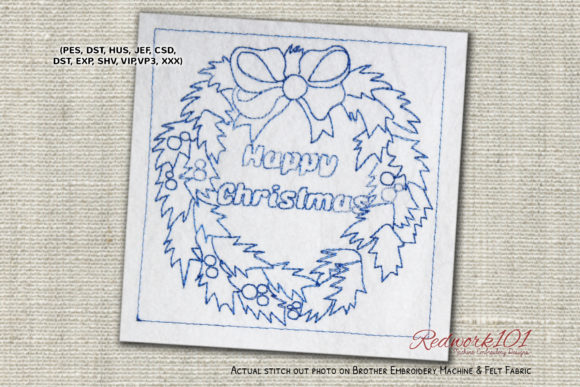
Opening Decorative Christmas Wreath Redwork, the immediate feel is warm, approachable, and quietly festive. The redwork tradition gives it a heritage stitched look that reads as handmade without being messy. For a small business, that handmade quality is currency. Customers connect with it because it signals care, not mass production. The wreath motif carries classic Christmas associations, but the linework style keeps it versatile enough for seasonal branding, winter product drops, or even year-round use if your brand leans rustic or cottagecore.
One detail you must note from the product description: the box stitch shown in the preview is optional. The outer box color varies across designs, and unless it is integral to the artwork, you can skip that color stop entirely. This gives you flexibility. If your brand aesthetic is clean and minimal, removing the box keeps the wreath floating and organic on fabric. If you want a badge or patch look, keeping the box adds structure. I always test both versions on a sample swatch before committing to a production run.
Business Applications That Make Sense
A design like this earns its keep when placed thoughtfully. I have stitched similar redwork wreath motifs for a dozen different small business scenarios, and here is where Decorative Christmas Wreath Redwork performs strongest:
- Embroidered patches for seasonal tote bags, customer loyalty gifts, or limited edition merchandise drops
- Apron embroidery for bakeries, florists, coffee shops, and handmade studios wanting a subtle festive accent
- Chest logo accents on work shirts, where the wreath frames a business name or sits as a standalone mark
- Sleeve details on long-sleeve tees or sweatshirts, adding visual interest without overwhelming the garment
- Cap embroidery on the side panel or above the back arch, where curved surfaces demand a design with modest stitch density
- Tote bag design placement on pocket corners or centered on natural canvas
- Product packaging accents on fabric pouches, linen wraps, or reusable gift bags that double as branded merch
Each of these applications shifts how the design reads. On an apron, Decorative Christmas Wreath Redwork feels professional and welcoming. On a tote bag, it becomes a fashion detail that customers want to carry. On a cap side panel, it turns into a conversation starter. The key is understanding that the same digital embroidery file can serve multiple product categories when you plan stitch order, thread colors, and stabilizer correctly.
When Redwork Becomes a Branding Tool
Redwork embroidery carries a specific emotional weight. It reminds people of handmade linens, holiday traditions, and small-batch craftsmanship. For a boutique business, that association transfers directly to your brand identity. A pet brand using Decorative Christmas Wreath Redwork on bandanas or treat bags gains that warmth. A florist stitching it onto apron fronts reinforces the natural, hand-tied aesthetic of their arrangements. A creative studio adding it to project pouches signals that they value process and detail. This is not just decoration; it is a visual asset that shapes customer trust and perceived product value.
Technical Considerations Before You Stitch
Experienced embroiderers know that a beautiful preview does not guarantee a clean stitch-out. Here is what I check before running Decorative Christmas Wreath Redwork on any business order:
- Stitch density in the wreath body. Redwork relies on linework, but if the lines run too dense on small scales, you get puckering on lightweight fabrics. Test at actual size first.
- Thread color contrast. Red on natural linen reads differently than red on black denim. I test on light, medium, and dark fabric swatches to confirm visibility and mood.
- The optional box stitch. If included, check whether the box outline competes with the wreath for visual dominance. On small patches, the box can crowd the design. On larger placements, it adds a finished frame that works beautifully.
- Hoop size requirements. Confirm the embroidery file fits your available hoop sizes before purchasing. I always advise checking the design dimensions with the supplier if not clearly listed.
- Stabilizer choice. For apparel with stretch, use a cutaway stabilizer. For tote bags and structured caps, a tear-away backing often suffices but test on the exact fabric you plan to sell.
- Small-scale legibility. If you plan to use this as a chest accent or patch under three inches, stitch a sample and check that the wreath interior details remain distinct.
Fabric Texture and Washing Durability
Redwork designs tend to perform well on woven fabrics like cotton canvas, linen, and denim. Knit fabrics introduce stretch that can distort fine linework, so stabilize accordingly. For items that face frequent washing, such as staff uniforms or café aprons, I recommend polyester thread with good colorfastness and a dense enough stitch structure to survive industrial laundering. Decorative Christmas Wreath Redwork has a clean linework style that should hold up well, but always run a wash test on one sample before producing fifty units for a client.
Brand Identity and Customer Engagement
Adding an embroidered mark to your products changes how buyers perceive your brand. A plain tote bag becomes a curated item. A basic apron feels like part of a uniform story. A simple cap turns into limited edition merch. Decorative Christmas Wreath Redwork brings a seasonal narrative that customers recognize and respond to emotionally. That recognition drives engagement, repeat purchases, and word-of-mouth sharing when someone asks where they got that beautifully stitched piece.
For Etsy sellers and craft business owners, this design offers strong visual consistency across product photography. A wreath motif photographs well on flat lays, hanging displays, and modeled shots. The redwork style creates contrast that reads clearly in thumbnails and listing images, which directly supports buyer confidence and click-through rates. When potential customers see a cohesive design asset used across aprons, pouches, and gift sets, they perceive a professional brand rather than a hobby seller.
Practical Designer Workflow Tips
When I integrate a design like Decorative Christmas Wreath Redwork into a client project, I follow a repeatable workflow that prevents costly mistakes:
- Test in black and white first. Print a paper template at actual size and check placement on the garment. This reveals spacing issues before you load the machine.
- Stitch a sample on the exact fabric. Do not assume the design behaves the same on canvas as it does on twill. Test on the real product material.
- Review thread color choices. Traditional red is the obvious pick, but I have also stitched this style in deep green, navy, gold, and soft blush for brands wanting a non-traditional palette.
- Create a printable mockup for client approval. Use the design preview or a stitched photo to show the client exactly where the embroidery sits. Written descriptions lead to misunderstandings.
- Compare it beside other design assets. If this wreath will sit near a logo or text, ensure the visual weight and style match. A delicate redwork wreath next to a heavy satin-stitch logo can feel unbalanced.
- Confirm commercial licensing. Before using Decorative Christmas Wreath Redwork on merchandise you sell, verify that the embroidery file license permits commercial use. Most digital embroidery file sellers offer standard commercial terms, but always check.
Where to Use This Design Carefully
Not every placement works well for a design of this style. Based on my experience, here are the scenarios where you should pause and test before proceeding:
- Very small patch sizes under two inches. The wreath interior details may close up or become illegible. Scale matters for linework designs.
- Curved cap fronts. The wreath shape can distort on the crown curve. Side or back placements are safer, or test with a cap-specific hoop and backing.
- High-texture fabrics like fleece or chunky knit. The fine lines of redwork can sink into plush surfaces and lose definition. A topping stabilizer may help, but test thoroughly.
- Dark uniforms with thin red lines. Red thread on black can look striking or disappear depending on lighting and thread sheen. Sample under different light conditions.
Final Thoughts from the Embroidery Floor
Decorative Christmas Wreath Redwork is a design that rewards thoughtful application. It is not a one-size-fits-all file, but for the right brand and the right product, it delivers a finished product that feels intentional, warm, and commercially polished. Small business owners looking for seasonal merch, boutique branding accents, or handmade product details will find this design earns its space in their embroidery library. Take the time to test, adjust thread colors thoughtfully, and always keep a stitched sample on hand for client consultations. When a customer holds a product with this wreath stitched cleanly onto quality fabric, they feel the difference that professional embroidery makes.