An Embroidery Designer's Take on the Scout and Flag Redwork
When you're looking for a design that can carry meaning, serve a community, or honor a tradition, you often turn to themes with clean, recognizable iconography. The Boy Scout Holding a Flag Redwork Design is exactly that kind of piece. As a designer who regularly evaluates files for real client projects and my own small shop merchandise, my first impression of this design was one of classic, quiet patriotism. It has a timeless, illustrative feel, reminiscent of vintage patches or commemorative badges. The single-line redwork style gives it an immediate sense of handmade authenticity, which is a powerful quality when you're creating personalized gifts or boutique products.
The Heart of the Design: Where Mood Meets Market
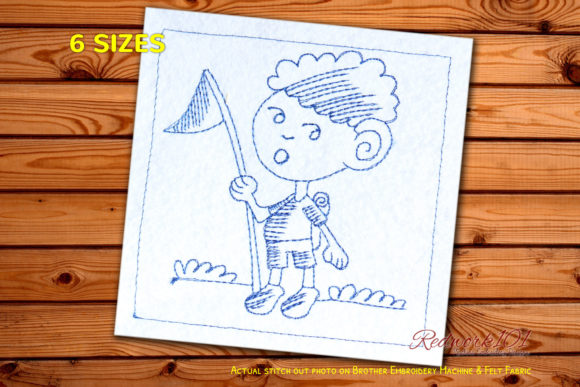
The layout is straightforward—a scout figure holding a flag—which creates an immediate emotional connection for anyone with ties to scouting, military service, or simply a love for national pride. This isn't a loud, overly detailed graphic; it's a respectful symbol. That visual personality makes it incredibly versatile. I instinctively thought of it on a canvas tote bag for a scout leader, or as a subtle emblem on the corner of a pillow cover for a veteran's home. The detail level is intentional: enough to clearly define the figure and flag, but not so dense that it would become a heavy, stiff embroidery patch on lightweight fabrics like baby clothes or fine linen tea towels.
Real-World Stitching: From Tote Bags to Custom Caps
In practical application, this embroidery design performs well across a range of typical projects. On medium-weight fabrics like cotton twill for tote bags or denim for aprons, the redwork lines will stitch out with clear, crisp definition. For custom apparel like sweatshirts or t-shirts, the lighter stitch density of a redwork design is a benefit—it won't overly weigh down stretchy fabric, reducing puckering if you use the correct stabilizer. I'd consider it for a heartfelt holiday gift, like an embroidered blanket for a retiring scoutmaster.
However, its true strength might be in products where recognition and clean presentation are key. As an embroidered patch, it would look authoritative and professional. For small business merchandise—think a local scout troop's fundraiser items—it lends instant brand consistency and trust. On Etsy listings or in craft fair displays, a finished product like a kitchen towel or pillow with this design tells a story, which boosts buyer engagement. It's giftable because it's specific yet universal within its niche.
Considerations for a Perfect Stitch Out
While the design is versatile, there are situations where you should proceed with a bit more caution. The note about the optional box stitch is important. On curved surfaces like caps, a bounding box might help with placement, but if it's a contrasting color as mentioned, you need to decide if it complements or distracts from the core image. For dark fabric backgrounds, redwork can lose impact; always test thread color contrast on scrap fabric first. I'd avoid very small hoop sizes here, as the scout figure and flag need a certain scale to maintain their integrity—tiny lettering or very dense corners aren't a concern with this style, but cramped spacing could blur the intended shape.
Textured fabrics, like some blankets or heavy knits, might require extra stabilizer to keep those clean lines sharp. For products destined for frequent washing, such as baby embroidery on a onesie, the simpler stitch pattern is actually a advantage, as it's less likely to snag or wear heavily compared to complex fill stitch areas.
Turning a Digital File into a Valued Finished Product
From a commercial embroidery or craft business perspective, this design is a straightforward asset. It creates visual appeal through symbolism rather than complexity, which often translates to faster stitching times and satisfied customers. For apparel decorators, it's a reliable choice for custom orders from scout families. As a digital embroidery file, its value lies in its clear usability for both personal and commercial projects—though, as always, you must confirm the specific licensing before selling finished items.
My practical notes for any embroidery designer using this would be: always run a test stitch on a scrap of your target fabric. Inspect how the small details, like the flag's lines and the scout's profile, translate. Does it need a slight size adjustment for your specific hoop size? Check it in black and white mockups to truly see the form, and compare how it looks imagined on both light and dark backgrounds. The design’s strength is its clarity, so protect that by using proper stabilizer and respecting the fabric texture.
A Design That Earns Its Place
Ultimately, the Boy Scout Holding a Flag Redwork Design isn't about flashy technique; it's about resonant content. In the world of handmade products, that's a powerful commodity. It fits naturally into the Sports category through its theme, but its application is far broader—it's about community, honor, and memory. Whether you're an Etsy seller creating personalized gifts, an apparel decorator fulfilling a client's request for a commemorative sweatshirt, or a hobbyist making a pillow cover for a friend, this design provides a professional, heartfelt focal point. It stitches a story, and that's the best kind of embroidery project you can have.